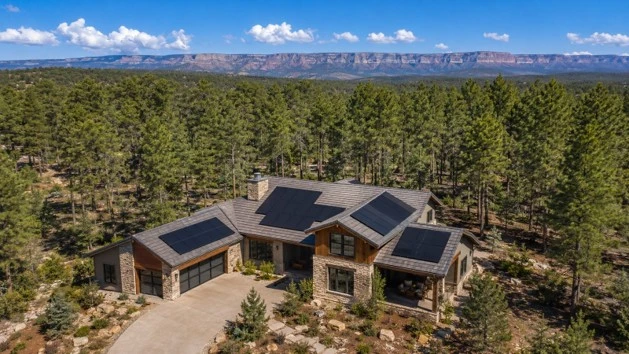
Rooftop solar on a Rim Country home near Payson, Arizona, with the Mogollon Rim in the distance.
| The most important point: A buyer can qualify for the mortgage and still encounter a separate qualification or transfer problem with a solar loan, lease, or power-purchase agreement. Treat the solar arrangement as its own transaction and start early. |
What buyers and sellers should know before solar financing, transfer requirements, or missing documents delay closing
By Dennis Riccio, REALTOR® | West USA Realty
Solar-equipped properties are not the majority of homes I encounter in Payson and the surrounding Rim Country communities. But when solar is present, it can add an extra layer of documents, financing, qualifications, inspections, and coordination to an otherwise ordinary home sale.
However, this is only the visible part of the problem. Much more critical issues include ownership of the system, whether there is any outstanding debt, whether the buyer qualifies to assume the debt, the terms of the final transaction compared to what was disclosed, and whether the solar company will be able to finish its work by the closing date.
In November 2025, Arizona REALTORS® updated the Solar Addendum with an increased focus on the simple truth that installing a solar energy system takes a lot of time. So, it is important that sellers start this process early, buyers file all necessary paperwork quickly, and both parties select a reasonable closing date.
Start With the Right Question: How Is the Solar Arranged?
“Does the home have solar?” is only the beginning. Before a buyer or seller can evaluate the effect on the transaction, the parties need to identify the legal and financial arrangement behind the system.
- Owned outright. The seller owns the equipment. And there is no remaining solar debt or lease.
- Financed purchase. The seller might own the equipment but still owe on a loan. Documents will show if the loan balance needs to be paid off or if it can be assumed by a new owner.
- Lease. Equipment is owned by a solar company, and the homeowner pays for the service through a lease arrangement. The buyer will have to apply and qualify to assume the lease.
- Power-purchase agreement. A third party owns the equipment. And the homeowner agrees to pay a certain price for electricity that is produced from it, under certain terms and conditions.
- Other or a combination of the above. Batteries, monitoring equipment, utility programs, tax assessments, and other equipment agreements can complicate matters.
Listing descriptions should not indicate that solar is “owned” simply because the system was purchased by the seller and not leased. If there is a remaining balance on the loan, buyers will need to know about the ownership of the equipment and associated financing.

A residential solar system may include an inverter, electric meter, disconnects, battery storage, and monitoring equipment in addition to rooftop panels.
One Home Purchase, Two Potential Approvals
A buyer using mortgage financing may be going through two different approval processes with two different companies, document requests, and timelines.
| MORTGAGE APPROVAL | SOLAR APPROVAL OR TRANSFER |
|---|---|
| Handled by the buyer’s mortgage lender | Handled by the solar lender, lessor, servicer, or system owner |
| Evaluates the buyer and the real property | May separately evaluate the buyer and the existing solar obligation |
| Includes appraisal, underwriting, and property requirements | May require credit approval, assumption documents, fees, and transfer confirmation |
| It does not automatically approve the solar obligation | Can affect debt-to-income calculations and the mortgage approval |
Key takeaway: Mortgage approval does not necessarily mean solar approval. The processes must be coordinated, but they are not the same process.

Mortgage approval and approval to assume a solar loan or lease may be separate processes. Start both early.
Why Solar Can Delay a Closing
Solar issues can delay closing when the process gets started too late. A property can be under contract for several weeks before someone discovers that a document is missing, an account is delinquent, the buyer has not applied to take over the solar loan or lease, or the servicer needs additional time.
- Incomplete documentation. The seller may be missing the original contract, contract amendments, payoff information, warranties, or the most recent account statement.
- Different buyer qualification criteria apart from the mortgage. Even if the buyer qualifies for a mortgage, the buyer may not qualify to assume the solar loan or lease, or the added payment may affect mortgage eligibility.
- Transfer or payoff process delays. Solar systems and payoffs might involve their own paperwork, approvals, payments, and processing delays.
- Delinquent account. A delinquent account can complicate the assumption of the solar system and may require additional payments or further discussion.
- Terms that don’t match. What the buyer ends up with can look different from what they were told at the start. The monthly payment, interest rate, time left on the agreement, or future price increases might have changed.
- Liens, filings, or releases. Escrow and the mortgage lender might need to make sure any payoff, lien release, or other required documents are completed before closing.
- Roof, insurance, and system condition. If the roof needs to be replaced, the panels may have to come off and be reinstalled. Buyers should also check permits, warranties, system performance, batteries, and insurance.

A roof inspection should consider panel mounting points, flashing, roof condition, permits, warranties, and potential removal and reinstallation costs.
| Do not wait until the week of closing. If a transfer, assumption, payoff, release, or utility action is required, the process should begin immediately after contract acceptance and preferably be investigated before the property is listed. |
What Rim Country Sellers Should Do Before Listing
The best time to solve a solar problem is before a buyer, lender, and closing date are involved. A seller should begin by locating the documents and identifying the people or companies that control the system and any related obligations.
- Arrangement identification. See if the system is owned, financed, leased, or under a power-purchase agreement.
- Documentation collection. Collect the original agreement, amendments to it, if any, financing agreements or leases, warranties, and equipment list.
- Current status confirmation. See if there are outstanding balances on the account, payments being made each month, the remaining period of the agreement, and if everything is in order.
- Questions on payoff and assumption. Ask about the procedures for payoff and assumption in writing and see if there are certain time limits involved.
- Collect performance records. Gather recent utility bills, production reports, monitoring information, and details about batteries or other equipment.
- Check the roof and permits. Look at the installation permits, the roof’s age and condition, and what it may cost to remove and reinstall the panels if needed.
- Be careful with marketing claims. Avoid promising that solar will eliminate electric bills, add a certain amount of value, or transfer easily to the buyer.

A buyer reviews solar agreements and related documents with a real estate professional during an Arizona home purchase.
What Buyers Should Investigate
Do not base your purchasing decision solely on the listing or the seller’s general description of the property. Documentation is important in this case. The investigation should be done early enough for the buyer to consider how it could affect the purchase.
- Who owns the solar system, and is there still a balance to pay?
- Will the buyer have to take over a loan, lease, power-purchase agreement, or utility program?
- How much is the payment, how long is left on the agreement, and are there interest charges, price increases, or transfer fees?
- Does the buyer have to qualify separately, and has that process started yet?
- Do the final approval documents match what the buyer was originally told?
- Could the solar payment affect the buyer’s mortgage or debt-to-income ratio?
- Were the proper permits and inspections completed, and exactly what equipment comes with the system?
- What do the latest utility bills and production records tell you about how the system is performing?
- Which warranties will transfer to the buyer, including those for the equipment, workmanship, roof penetrations, battery, or production?
- How much life does the roof have left, and what could it cost to remove and reinstall the panels if the roof needs work?
- Will the homeowner’s insurance cover the solar system, and could it change the coverage or premium?
A Practical Solar Transaction Timeline
- Before listing or making an offer, find out what type of solar arrangement is in place and gather the agreements, account details, and system records.
- When preparing the contract, use the appropriate Arizona REALTORS® Solar Addendum and state how the payoff or assumption, fees, and timing will be handled.
- Once the offer is accepted, the seller should start the transfer or payoff process right away. The buyer should apply and send in any requested paperwork as soon as possible.
- During due diligence, the buyer should review the solar documents and system, talk with the mortgage lender and insurer, and check that the final terms match what was originally disclosed.
- Before closing, Escrow should make sure any required payoff, release, assumption, transfer fees, signatures, and written approvals are in place.
- At and after closing: Finish any remaining utility, monitoring, warranty, and account transfers.
Does Solar Automatically Increase the Home’s Value?
Not necessarily. Solar could increase the appeal of a property in the eyes of some buyers, especially if it is owned, operational, well-documented, and coupled with a quality roof. However, how much value it adds would depend on many factors, such as the market, comparables, age and condition of the system, energy production, utility regulations, and the financing terms.
A leased system, high monthly payments, rising rates, older equipment, roof problems, or a difficult transfer can make solar less appealing to a buyer. Sellers should not expect to recover the full cost of the solar system when they sell their home.
Current market conditions in Rim Country
Frequently Asked Questions
1. Can a buyer assume the seller’s solar loan or lease?
Assumptions may sometimes be permitted, based on what the agreement states and what the servicer decides. Also, the mortgage lender should consider the effects of the obligation on the mortgage.
2. Should a seller pay off the solar before listing?
There is no universal answer. The seller should first obtain a written payoff, confirm how a release will be handled, and compare that option with any permitted assumption. The purchase contract should clearly state the parties’ agreement.
3. Does “owned solar” mean there is no debt?
Not necessarily. The seller may own the equipment but still have a loan balance. Ask separately who owns the panels and whether any solar-related obligation remains.
4. What happens if the buyer cannot qualify for the solar obligation?
A possible solution could include a seller pay-off, an alternate arrangement, an extension, or provisions within the contract. These options would be based upon the solar agreement, purchase contract, financing needs, and timing.
5. Will solar eliminate the electric bill?
No, not always. Savings will depend on various factors like system size and condition, production levels, usage levels at home, shading, rates offered, charges, batteries, and utility company policy. Purchasers need to look at the actual numbers and production records.
Local Experience and Early Coordination Matter
Solar power should not cause problems in a sale. The most challenging situations usually involve uncertainty or delays. For example, no one has the agreement, no one knows who needs to approve the transfer, or the buyer’s qualification process starts too late.
If your Payson or Rim Country property has a solar panel system, I would suggest that you identify the setup early on, document it properly, set a realistic schedule, and quickly contact the mortgage company, escrow agent, solar company, insurance company, inspector, etc.

Dennis Riccio, REALTOR®, West USA Realty, serving Payson and the surrounding Rim Country communities.
| Thinking about buying or selling a solar-equipped home? I’m Dennis Riccio, a REALTOR® with West USA Realty, serving Payson and the surrounding Rim Country communities. I can help identify transaction questions early and coordinate with the appropriate professionals before a solar issue puts the closing date at risk. Visit PaysonArizonaRealEstate.com to learn more or get in touch. |
|---|
| Disclaimer: This article is meant to be general information only and does not constitute legal, tax, lending, insurance, appraisal, solar, or engineering advice. Solar agreements and contracts may differ. Buyers and sellers should review their documents as necessary. |