
If you own a home in Pine or are thinking of buying one, Pine water is a practical, everyday concern worth understanding. Water affects your utility costs, home construction plans, fire protection, and long-term property value. This guide explains what Pine-Strawberry Water Improvement District (PSWID) projects, meter rules, and pipeline upgrades mean for homeowners, in plain language and with clear, actionable steps.
What PSWID Is and Why It Matters to Homeowners
PSWID manages drinking water for Pine and Strawberry. Because it serves more than a handful of connections, it must meet state and federal standards. That means regular testing, reporting, and capital planning. For homeowners, PSWID is more than a utility; it is the organization that determines whether your lot can be serviced, how reliable your water pressure will be, and what fees you will pay when you need a new connection.
PSWID began in 1996 by combining several small, private systems and has been upgrading wells, pumps, and mains ever since. Those improvements directly affect everyday life in Pine, from morning showers to garden irrigation.
Why Water Supply and Pressure Matter Where You Live
Pine’s mountain setting is part of its appeal, but it also creates practical challenges. Some wells are shallow and seasonal, and moving water uphill to neighboring Strawberry requires energy and robust infrastructure. For homeowners, the most important impacts are:
- Water availability. Some areas faced shortages in the past. New projects aim to reduce that risk.
- Pressure and reliability. Upgraded wells and storage help keep pressure steady during peak times like mornings and holidays.
- Fire protection. On-site storage at higher elevation improves fire flows, which matters for safety and insurance.
Understanding these factors helps homeowners plan renovations, irrigation, and any future construction.
Pine Water Meters: Fees, Timing, and What Homeowners Should Know
If you plan to build, expand, or establish a new service, Pine water meters are an essential detail. Key facts:
- Connection fee. PSWID currently charges a flat $10,000 for a new water meter. That fee is due when service is requested. Budget for it up front if you plan to build.
- Meter issuance limits. The district has capped the number of new meters issued each month to match system capacity. That can cause delays for new construction.
- Waiting lists. Being on a waiting list does not mean the meter fee is paid or the meter is installed. Payment and installation happen when you request service, which affects construction timelines.
- Documentation matters. If a homeowner has already secured and paid for a meter, that paperwork is useful for resale and financing.
Practical advice: if you are buying land in Pine, verify meter availability with PSWID before you make an offer. If you already own a lot and plan to build, contact PSWID early so you can align the meter installation with permits and financing.
SV3 and Other Projects That Improve Water for Pine Homeowners
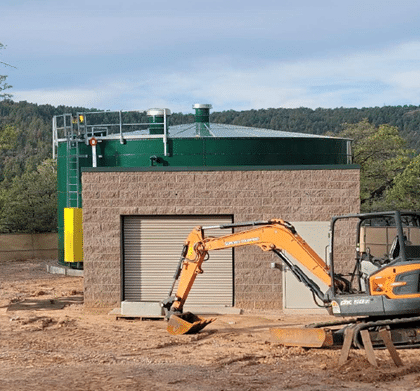 SV3 Water Tank in Strawberry, Arizona
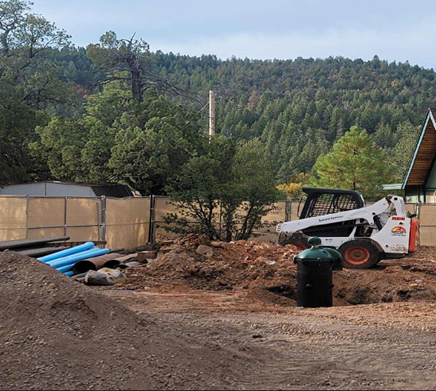 SV3 Water Tank in Strawberry, Arizona
A major project called SV3, though located in Strawberry, helps Pine homeowners. SV3 brings a deep production well, a pump station, and on-site storage designed to reduce the demand on Pine during peak periods. For homeowners, SV3 delivers several benefits:
- Less pumping from Pine to Strawberry, which eases the strain on Pine’s wells.
- More stable pressure and reduced low-pressure events.
- Better fire-flow capability thanks to on-site storage.
- Greater chance the district will relax meter issuance limits over time.
Other Pine-focused investments, such as the Milk Ranch 2 well and transmission-line upgrades, also improve local supply and reliability. Together, these projects help protect home values by strengthening basic services.
Leakage, Pipeline Replacement, and Household Impact
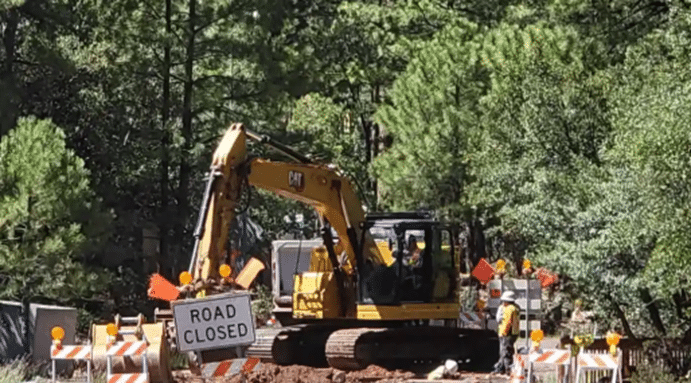 Pine Strawberry Water District Construction Crew Pine, Arizona
The district has historically faced substantial water loss through leakage. Much of that loss occurred on long transmission lines, such as the Ralls line that carries water to Strawberry. Replacement of aging mains reduces leakage and improves efficiency. For homeowners, that means:
- More of the water the district pumps is available for households.
- Lower long-term operational costs, which helps stabilize rates.
- Fewer interruptions from pressure swings or emergency repairs.
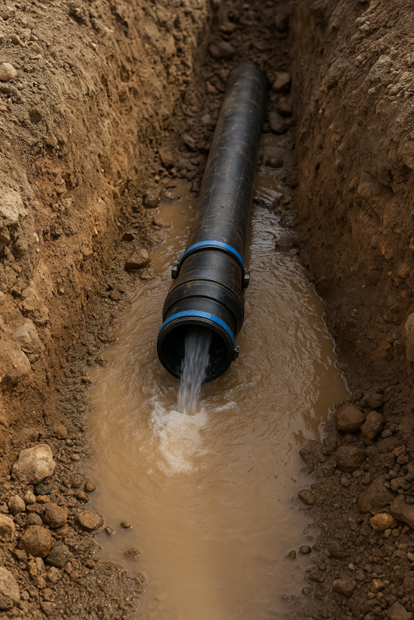
If you live near a recently replaced main, you can expect steadier service and a lower risk of sudden outages.
Federal Funding and the Long-Term Outlook for Homeowners
Large-scale upgrades require significant funding. PSWID has pursued federal grants to finance mains, wells, and storage. Winning grant money lessens the load on local ratepayers and helps the district plan predictable upgrades. For homeowners, federal investment signals a long-term commitment to reliable service and more measured community growth.
Homeowner Checklist: Practical Steps to Protect Your Plans
For Current Homeowners
- Keep copies of any meter payment or service documentation. That helps when selling.
- Learn whether recent line replacements or well work were completed near your property. Those upgrades can improve reliability and insurance prospects.
- Consider water-wise landscaping and fixtures to lower your household demand and utility bills.
For Prospective Homeowners
- Verify meter availability with PSWID before buying vacant land. A meter delay can add months to your build schedule.
- Include the $10,000 connection fee in your budget. Confirm whether other fees or on-site requirements apply, such as backflow devices or service-line work.
- Ask for recent PSWID project updates that affect your parcel, including nearby main replacements and changes to meter-issuance policies.
For Homeowners Selling a Property
- Disclose meter status and provide any paid meter documentation. Buyers value clarity on water readiness.
- Mention nearby infrastructure improvements in your listing, such as new mains or improved wells, to reassure potential buyers about reliability.
Bottom Line
Pine water is central to daily life and to the value of Pine Arizona homes. Knowing how meters work, what infrastructure projects are underway, and how pipeline upgrades affect service can save homeowners time and money. PSWID’s ongoing investments, from well work to transmission-line replacement and the SV3 project, are positive steps toward a more reliable water future in Pine