Payson Wildfire Preparedness: What Homeowners, Buyers, and Sellers Need to Know About Insurance and Real Estate
Dennis Riccio
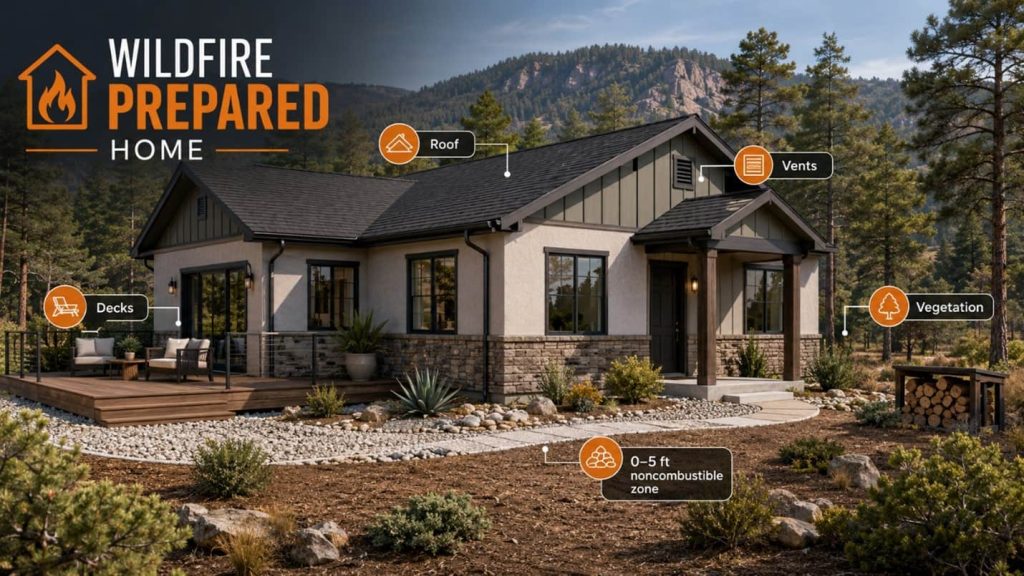
Wildfire risk is increasingly being evaluated at the parcel level, including the home, roof, vents, decks, vegetation, and the first five feet around the structure.
Wildfire preparedness in Payson and Rim Country is no longer just a fire-season topic. It is quickly becoming a real estate issue, an insurance issue, a lending issue, an affordability issue, and a property-value issue.
For homeowners, buyers, and sellers in communities such as Payson, Pine, Strawberry, Star Valley, Christopher Creek, and other forest-adjacent areas, wildfire risk can affect much more than personal safety. It may also affect whether a home can be insured, financed, marketed, and sold.
For REALTORS®, this means wildfire preparedness can no longer be treated as background information. It may now affect whether a transaction can be insured, financed, and closed.
Watch the Video Overview
Watch this short overview, then read below for practical steps homeowners, buyers, sellers, and REALTORS® should be thinking about now.
Why I Am Writing About This
I recently had the opportunity to participate in the Northern Gila Fire Chiefs’ 2nd annual Wildfire Symposium as a representative of the local real estate community and as President of the Central Arizona Association of REALTORS®.
The event brought together fire professionals, forest management experts, public safety officials, utility representatives, insurance professionals, and community stakeholders to discuss wildfire risk and practical steps our communities can take to become more resilient.
One of the clearest takeaways was this: wildfire risk must be addressed at more than one level.
Forest health matters. Community planning matters. Fire response matters. Utilities and infrastructure matter. But the condition of the individual home and the first several feet around it may be one of the most important factors in whether that home survives a wildfire event.
In other words, wildfire is not just a forest issue. It is a community issue, and it is now part of the real estate conversation in Payson and Rim Country.
Why the Forest Looks Different Than It Used To
Neil Chapman, Wildland Fire Captain with the Flagstaff Fire Department, provided helpful background on how our forests reached their current condition.
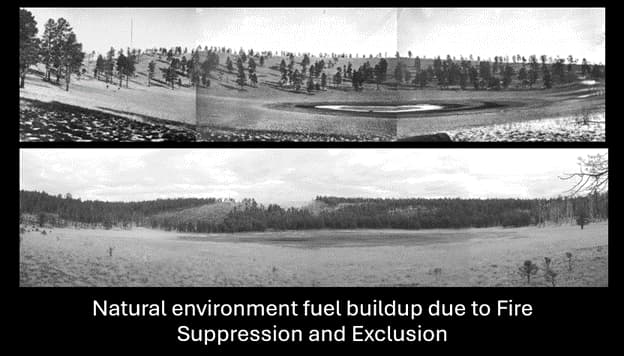
His presentation explained that fire suppression and exclusion in northern Arizona began around 1876. Before that time, fire returned frequently to many ponderosa pine forests. The Chimney Spring fire history study referenced in his presentation found a fire return interval of approximately 4.9 years between 1540 and 1876.
Those frequent fires helped maintain a more open, fire-adapted forest structure. With fire excluded for generations, many forests became denser and more vulnerable to severe fire.
That is why landscape-scale wildfire risk reduction remains important. Thinning, prescribed fire, and forest restoration work can help protect watersheds, wildlife habitat, local economies, and communities.
But the symposium also made clear that forest treatments alone are not enough.
A home can still ignite if embers land in pine needles on the roof, combustible mulch next to the siding, firewood stacked against the home, an unscreened vent, a wood fence attached to the structure, or debris under a deck.
That is where home-level mitigation becomes so important.
What Is the Wildfire Prepared Home Program?
The Wildfire Prepared Home program provides a science-based framework for reducing the likelihood that a home will ignite during a wildfire.
The program focuses on vulnerabilities that commonly lead to home ignition, including roofs, gutters, vents, decks, patios, fencing, siding, vegetation, firewood, combustible storage, and the first 0-to-5 feet around the home.
The program includes different levels of protection. The Base, or Essential, level focuses on protection from wind-blown embers, which are one of the leading causes of home ignition. The Plus, or Enhanced, level adds additional protection from direct flame and radiant heat.
For most existing homes in the Payson area, the Base level may be the most realistic starting point.
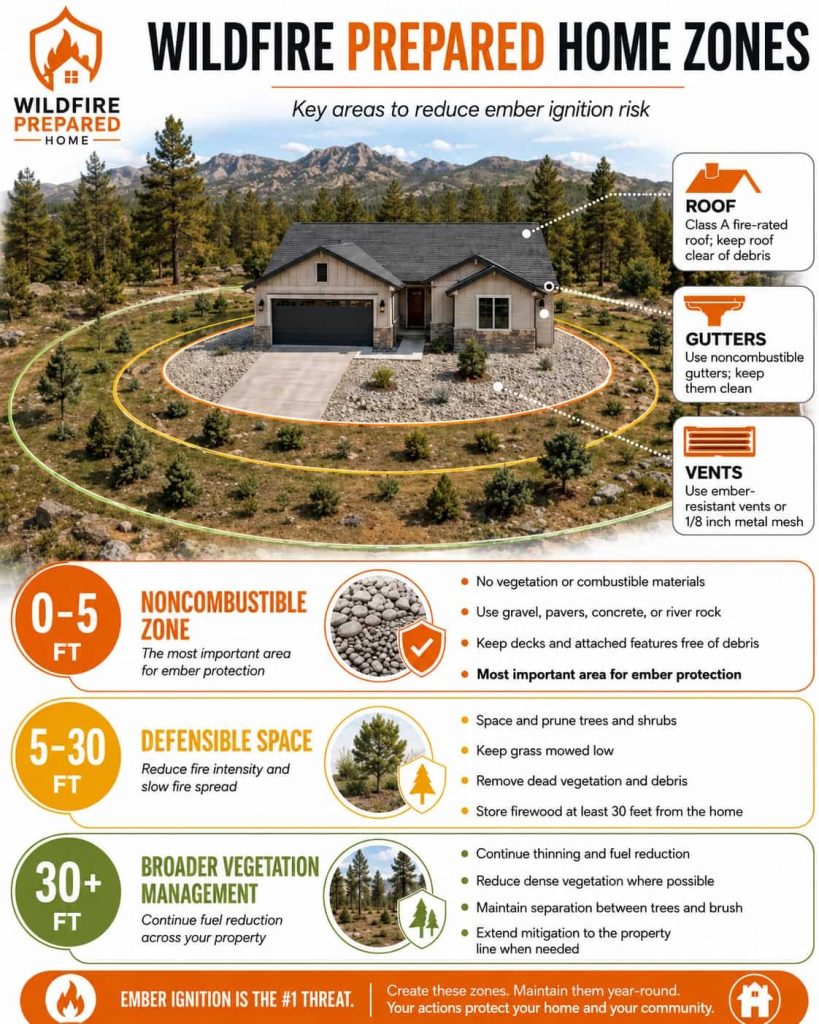
Some of the most important steps include keeping roofs and gutters clear of pine needles and leaves, maintaining a 0-to-5-foot noncombustible zone around the home, using proper vent screening, spacing vegetation, keeping firewood at least 30 feet from the home, and addressing combustible materials near decks, fences, and exterior walls.
The first five feet around a home may be one of the most important areas for reducing ember ignition risk.
Why This Matters in Payson Real Estate
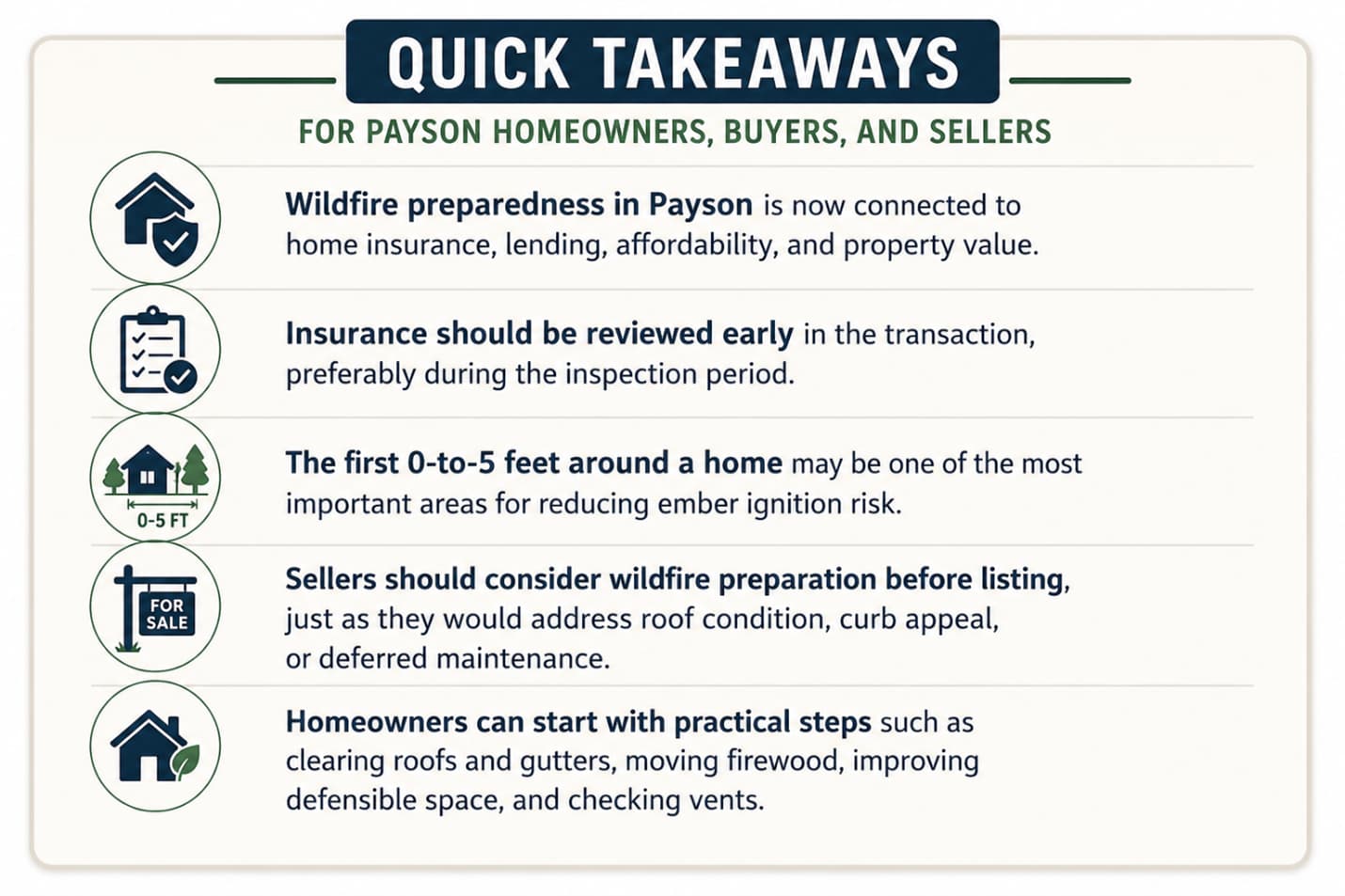
Buyers should ask insurance questions early, preferably during the inspection period, not days before closing.
For years, many buyers treated insurance as something to finalize near the end of escrow. In today’s market, that approach can create real problems.
In some cases, buyers may discover after they are already under contract that insurance is expensive, limited, subject to mitigation requirements, or unavailable through certain carriers. That can affect loan approval, monthly affordability, buyer confidence, and the ability to close.
I also recently spoke with Eric Santana of a local State Farm branch in Payson. According to Mr. Santana, State Farm has begun requiring wildfire-related certification or compliance with fire-safe guidelines for many homes in the Payson area.
His rough local estimate was that approximately 10 to 15 percent of homes may be difficult for State Farm to insure, approximately 20 percent may be insured without significant issue, and the remaining majority may need to meet wildfire safety guidelines before coverage is available. He also indicated that he expects this issue to grow and believes REALTORS® should be aware of it.
Those figures were shared as informal local observations and should not be understood as official State Farm underwriting guidelines, a companywide position, or a guarantee of coverage. However, the trend is important.
Insurance companies are paying closer attention to wildfire risk, and buyers, sellers, homeowners, and REALTORS® should be prepared.
Insurance Disclaimer
Insurance availability and underwriting requirements vary by carrier, property, location, and policy. The information in this article is for general educational purposes only and should not be treated as insurance advice, legal advice, or a guarantee of coverage. Buyers, sellers, and homeowners should speak directly with a licensed insurance professional about their specific property and coverage needs.
Buyer Tip
If you are buying a home in Payson, Pine, Strawberry, Star Valley, Christopher Creek, or another forest-adjacent area, contact your insurance professional as soon as you go under contract. Do not wait until the end of escrow. Insurance cost, availability, wildfire exclusions, deductibles, or mitigation requirements may affect your ability or willingness to close.
What Buyers Should Ask Early
Buyers should contact an insurance professional early in the transaction, preferably during the inspection period.
Important questions to ask include:
Is coverage available for this property?
Is wildfire coverage included?
Are there any wildfire exclusions?
Are mitigation steps required before coverage is issued?
Could the premium affect my loan qualification?
Is any wildfire certification or inspection required?
A policy that satisfies a lender’s basic requirement may not necessarily provide the level of protection the buyer assumes. Buyers should carefully review coverage, exclusions, deductibles, mitigation requirements, and premium costs.
Seller Tip
Before listing a home in Rim Country, consider addressing visible wildfire hazards. A clean roof, clear gutters, defensible space, properly screened vents, and removal of combustible materials near the home may help reduce buyer concerns and avoid insurance-related surprises during escrow.
What Sellers Should Consider Before Listing
For sellers, wildfire preparedness may become part of preparing a home for market.
Just as sellers often address roof issues, deferred maintenance, pest concerns, or curb appeal before listing, they may also need to consider visible wildfire hazards.
A clean roof, clear gutters, defensible space, properly screened vents, removal of combustible materials near the home, and relocation of firewood away from the structure may help reduce buyer concerns and avoid insurance surprises during escrow.
Visible wildfire hazards may affect marketability. Pine needles on the roof, combustible materials against the house, wood piles near the structure, unscreened vents, overgrown vegetation, combustible fencing attached to the home, and debris under decks may no longer be minor maintenance items. They may affect whether a buyer can obtain affordable insurance.
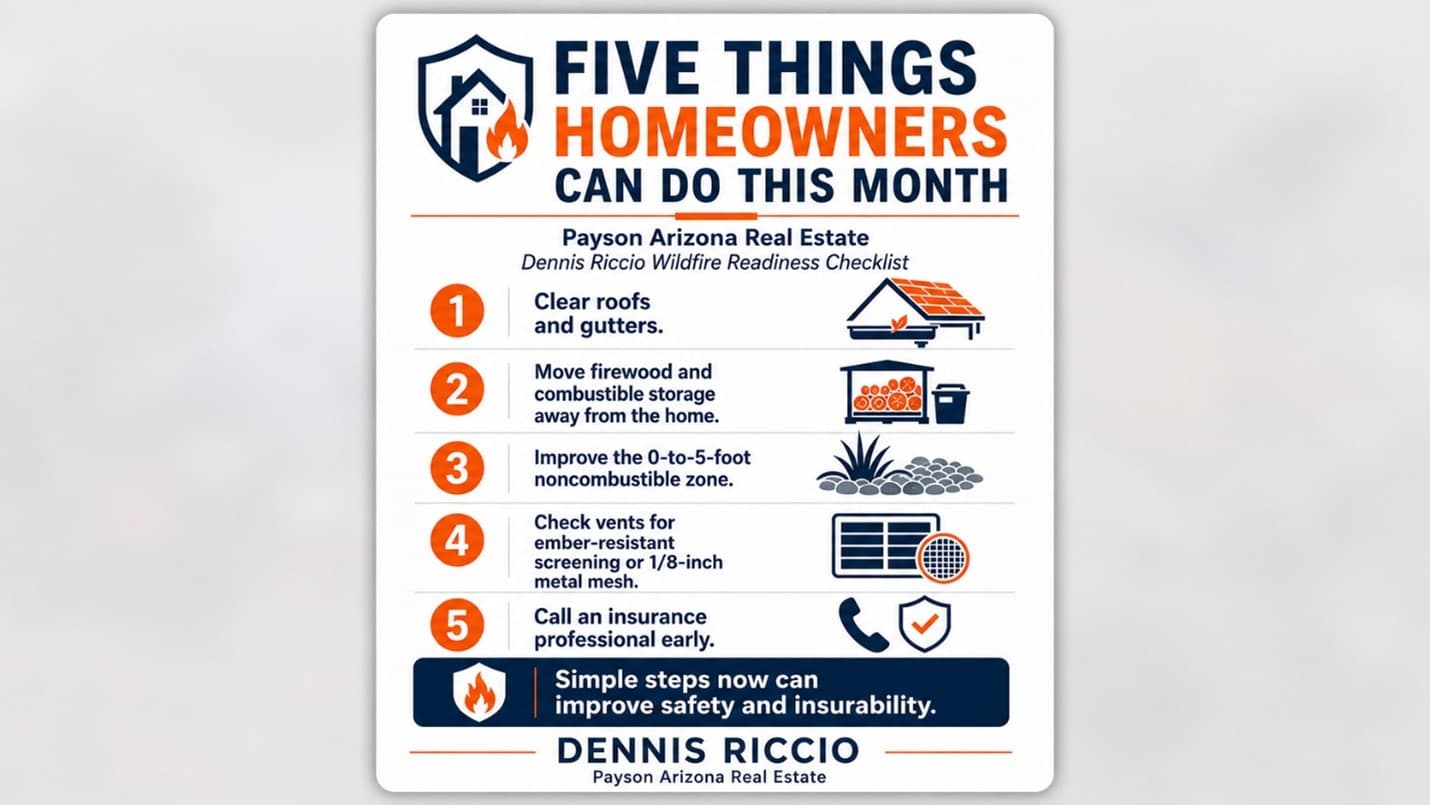
What Homeowners Can Do This Month
The good news is that homeowners are not powerless. Many important mitigation steps are practical and achievable.
Some wildfire mitigation improvements can be expensive, but many meaningful steps are low-cost or no-cost. Clearing gutters, removing pine needles, relocating firewood, and reducing combustible materials near the structure are practical places to start.
Why This Matters for the Community
Wildfire preparedness is not only about protecting individual homes. It is also about protecting neighborhoods, insurability, affordability, property values, lending, and the long-term stability of our communities.
If insurance becomes difficult or unaffordable, it can affect home sales, buyer demand, loan qualification, property values, and community resilience.
Rim Country can remain a beautiful and desirable place to live, but we must learn to live responsibly with wildfire risk.
For homeowners, that means taking practical steps to reduce risk. For buyers and sellers, it means addressing insurance early. For REALTORS®, it means understanding that wildfire preparedness is now part of transaction risk management.
Frequently Asked Questions
Does wildfire risk affect home insurance in Payson, Arizona?
Yes. Wildfire risk may affect insurance availability, premiums, mitigation requirements, deductibles, and underwriting review. Buyers and homeowners should contact an insurance professional early to understand their options.
Should buyers check insurance before or after the inspection period?
Buyers should investigate insurance as early as possible, preferably during the inspection period. Waiting until the end of escrow can create problems if coverage is expensive, limited, unavailable, or subject to mitigation requirements.
What is the 0-to-5-foot noncombustible zone?
The 0-to-5-foot noncombustible zone is the area immediately around the home where combustible materials should be reduced or removed. This area is important because wind-blown embers can ignite vegetation, mulch, firewood, furniture, debris, or other combustible materials near the structure.
Should sellers prepare for wildfire risk before listing?
Yes. Sellers may want to address visible wildfire hazards before going on the market. A cleaner, better-maintained exterior may reduce buyer concerns and help avoid insurance-related surprises during escrow.
What can homeowners do first?
Homeowners can start by clearing roofs and gutters, moving firewood away from the home, reducing combustible materials near the structure, checking vents, and consulting insurance and mitigation professionals.
Is wildfire preparedness the same as a guarantee that a home will be insured or survive a wildfire?
No. Wildfire preparedness can reduce risk, but it does not guarantee insurance coverage or guarantee that a home will survive a wildfire. Each property, insurance carrier, policy, and wildfire event is different.
Final Thoughts
Wildfire preparedness is no longer just about protecting homes from fire. In Payson and Rim Country, it is also about protecting insurability, affordability, property values, transactions, and the long-term strength of the communities we serve.
If you are buying or selling a home in Payson, Pine, Strawberry, Star Valley, Christopher Creek, or another Rim Country community, this issue should be part of the conversation early.
As a local REALTOR®, I can help you understand how wildfire preparedness may affect the real estate side of your transaction and help connect you with the appropriate insurance, fire-safety, and mitigation professionals.
About Dennis RiccioDennis Riccio is a REALTOR® serving Payson, Arizona and the surrounding Rim Country communities. He is also President of the Central Arizona Association of REALTORS®. Dennis helps buyers, sellers, and homeowners understand local real estate issues affecting the Payson market, including wildfire preparedness, insurance concerns, property value, and community resilience.